One of the main conditions a civilization must establish before they are indeed a complete civilization, among organized religion, centers of learning, and a bartering system, is a governmental system. There are many different types of government, ranging from the notorious Anarchism to the lesser-known Plutocracy. But the two forms of government in question are Monarchial rule and Democratic rule, or rather, a monarchy and a democracy. These two terms have obvious differences at first glance and these specific differences are what make one type better than the other. A monarchy is led by one single person at the very head of the entire governing body. Democracy derives its name from the Greek phrase meaning “rule of the people” which is a basic definition of how a democracy is run. By measuring and comparing how well a country has thrived under which type of government it becomes evident that a democracy is dominant over a monarchy.
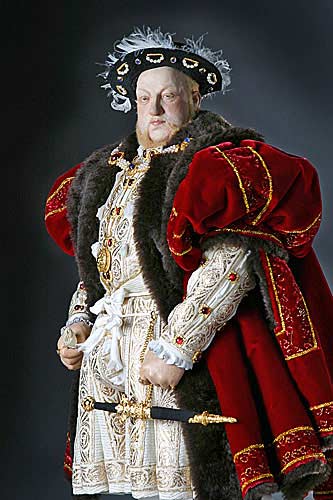
A democracy is not just more effective than a monarchy, a monarchy is too faulty and been the cause of too many hardships to even rank close in the same class as a democracy. The best example of how a monarchy pales in comparison to the accomplishments is the notorious King Henry VIII. The reasons as to why a monarchy is not effective are evidenced in Henry’s reign of terror. The most barbaric act that Henry executed was the divorce of his wife, Catherine of Aragon. Not only did he divorce his wife because she could not provide him with a rightful male heir but he voluntarily thrust himself into sexual scandal by marrying the woman who used to be his brother’s wife, subsequently trying to end the marriage by annulment, had an affair with the Boleyn sisters, Mary and Anne, and eventually had to go to higher authority to even get his marriage to become null and void. Even though his divorce was not a direct factor of his monarchial life, the people he was ruling over never forgot it and brought it up in the most benign places. For instance, in a letter to Thomas Cromwell pertaining to the Dissolution of the Monasteries the writer, while rummaging through Henry’s study, “and found in his study…a written book of arguments against the divorce of his king's majesty and the lady dowager” (http://www.fordham.edu/halsall/source/h8-glastonbury.html). This shows that even though the topic the man is writing about has nothing to do with divorce, he manages to bring it up to demonstrate his disgust with what Henry did. To make matters worse, even though the common people of England did not like Henry VIII any longer, they could do nothing to stop it. He could not be impeached and it would be a terribly hard task to try and assassinate him without there being any severe consequences. Even after three predecessors took the throne and tried to re-establish order in the fair English land, they could never erase the scorching marks Henry VIII, a monarch, had left in the peoples’ minds.

There is a definitive moment in history when democracy was introduced to monarchy and it impacted the world so much that it still lives on in modern democracy. This is the Magna Carta. While this document was not the full embodiment of modern democracy, it did introduce democracy to a yet monarchial society. In the first law of the Magna Carta there is the basis of democracy, “Wehave also granted to all freemen of our kingdom, for us and our heirs for ever,all the underwritten liberties, to be had and held by them and their heirs, ofus and our heirs for ever” (http://www.fordham.edu/halsall/source/mcarta.html). Even though this document did come many centuries before democracy was recognized and accepted internationally, it was democracy, giving power to the people. The Magna Carta went into effect when King John of England was in power and he did follow most of it accordingly, accepting that even he was under the power of the law. But as Henry VIII showed, old habits are hard to break and it is extremely difficult to change a government overnight. The Magna Carta did not appear and then disappear almost mysteriously, it kept being renewed and practiced over and over again well into the 18th century. Governments experimented with this new way and found that, above all, it worked.
 A modern democracy is a phrase that is refreshing after seeing the faults and cons of other primitive types of governments. A modern democracy is potently effective because of one main thing: the system of checks and balances. It is one of the things monarchies and other forms of government that did not flourish lacked. The three distinct branches of democracy, legislative, judicial, and executive keep each other in check to make sure that each is holding its own and also that they all stay as balanced as possible. Another main point of a democracy that made it effective and popular that monarchies lacked is also mentioned in the Magna Carta: power to the people. As evidenced several times in the Constitution of the United States, the foundation of the government is the “people”. “We the People of the United States… The House of Representatives shall be composed of members chosen every second year by the people… the right of the people” (http://www.usconstitution.net/const.html). From the Preamble to the articles to the amendments, not more than a few lines go by before the people are mentioned yet again. Democracy was formed with the peoples’ best interests in mind and thus had the people backing the government up every step of the way. Democracy had been thriving quite effectively for hundreds of years and shows no signs of stopping.
 Monarchies and democracies are two completely separate types of government and must be ranked differently. From how quickly countries develop under which rule to how the people view the government, democracy had monarchy beat. In the Middle Ages, monarchies were popular and the majority of the western world was under monarchial rule. But in modern times, hindsight has taught that most places ruled by a single person do not flourish for too long and eventually meet their demise. Democracies are spreading rapidly across the globe, giving hope to even the most humble of countries. There leaves little room for interpretation ; a democracy is more effective than a monarchy.
"File:Constitution Pg1of4 AC Icon Cut.png." Wikimedia Commons. Web. 15 May 2010. <http://commons.wikimedia.org/wiki/File:Constitution_Pg1of4_AC_icon_cut.png>.
"File:Henry VIII V2 BestLo.jpg." Wikimedia Commons. Web. 15 May 2010. <http://commons.wikimedia.org/wiki/File:Henry_VIII_v2_BestLo.jpg>.
"File:Magna Carta 1297.jpg." Wikimedia Commons. Web. 15 May 2010. <http://commons.wikimedia.org/wiki/File:Magna_carta_1297.jpg>.
"Medieval Sourcebook: Letter of Thomas Cranmer, 1533." FORDHAM.EDU. Web. 15 May 2010. <http://www.fordham.edu/halsall/source/cramner-hen8.html>.
"Medieval Sourcebook: Magna Carta 1215." FORDHAM.EDU. Web. 14 May 2010. <http://www.fordham.edu/halsall/source/mcarta.html>.
"The United States Constitution - The U.S. Constitution Online - USConstitution.net." Index Page - The U.S. Constitution Online - USConstitution.net. Web. 15 May 2010. <http://www.usconstitution.net/const.html>.


Nice argument and nice use of primary sources. I would ask, however: If democracies are inherently more stable, why did Athenian democracy last for only such a short amount of time?
ReplyDelete